Diary Excerpts: The Thomas Party’s Harrowing Journey on the Bozeman Trail
- juliann11
- March 1, 2024

Tragic Encounter: The Fate of the Thomas Party
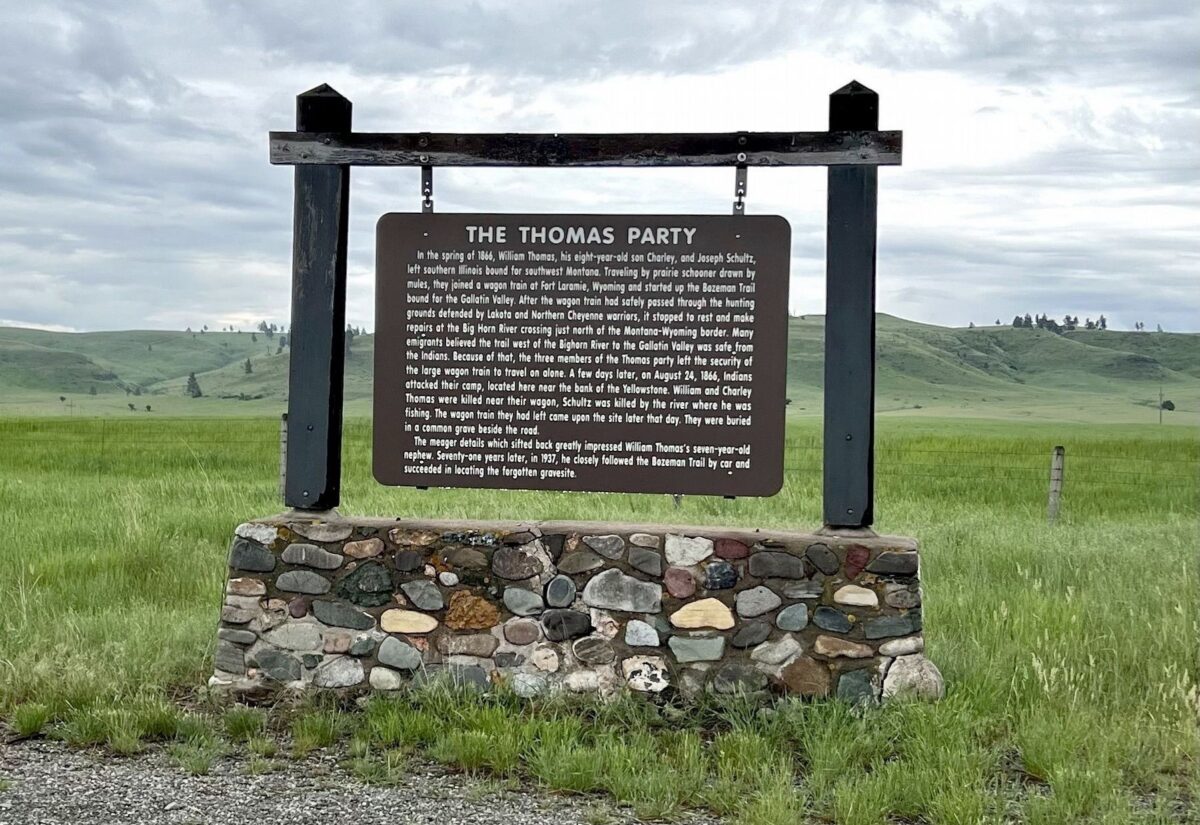
William K. Thomas, accompanied by his young son Charley and their driver Joseph Schultz, made the decision to travel independently beyond the Bighorn crossing, believing it to be safe. Departing from the larger wagon train they had been traveling with, known as the Thomas party, they forged ahead. However, tragedy struck on August 24, 1866, when the Lakota attacked their camp along the Yellowstone River. William and Charley Thomas met their demise near their wagon, while Schultz fell victim to the attack by the river where he was fishing. Later that day, the wagon train from which they had separated discovered their lifeless bodies and laid them to rest in a communal grave beside the road.
“For a moment I stand gazing at the lofty peaks now at the ruged [sic] rocks while my mind runs even then at the wild scenes of nature that spread out before my eyes. I am meditating upon the adventure that I am about to take county the cost, Summing up the danger, cold chills run through my blood.”
• William Thomas, July 31, 1866
“Where we struck the Yellowstone we found a Minister, his little son, and a driver [the Thomas Party] that had left the train at Big Horn and gone ahead, murdered by the Indians. They were scalped by the red devils, their stock run off and the contents of their wagon destroyed. They had not been killed long for their camp fire had not gone out.”
• Perry Burgess, August 25, 1866
“We camped near the graves of three men that were killed here on the 24th [of this month] by Indians. They had been traveling alone with one wagon, and had no arms. [William] Thomas, the man that owned the team was a religious man and said he put his trust in the Lord, and didn’t think he needed any arms. His son and a hired man were the other two. Thomas had 14 arrows put through him. He had $3,000 in greenbacks which was taken. A party which came along the next day found these men and buried them.”
Samuel Finlay Blythe, August 26, 1866